The Pasmore House, Documented and Otherwise
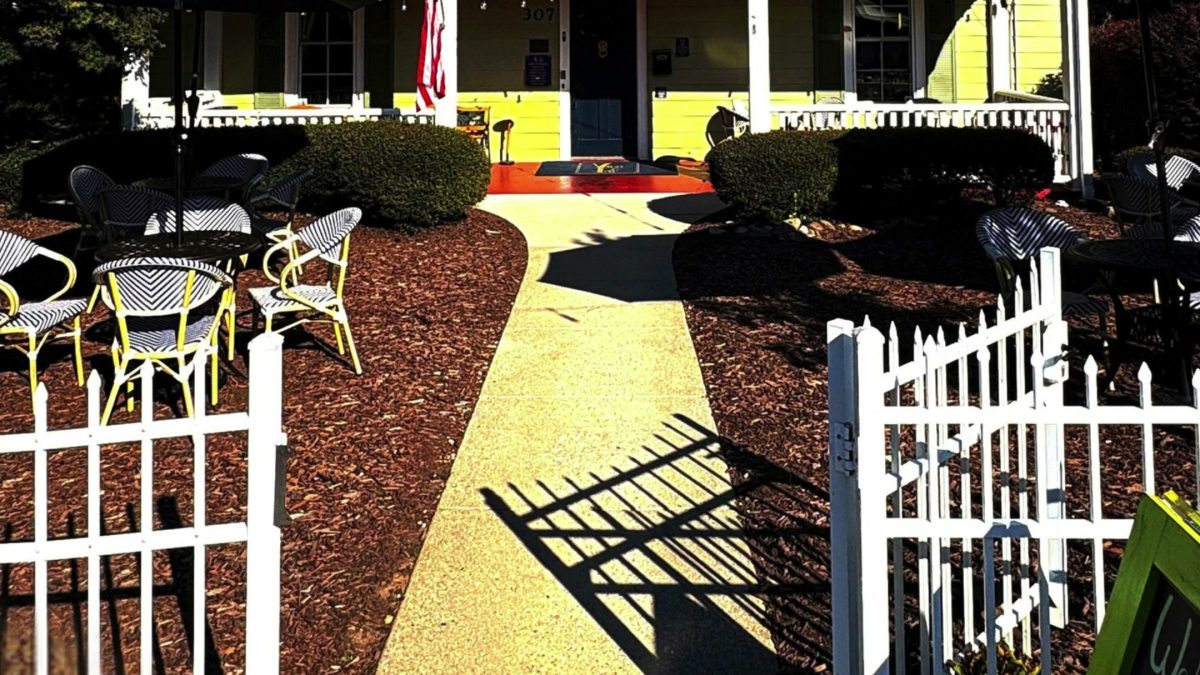
The Pasmore House has stood in Cary since 1900, which in this town makes it an elder. It has been a family home, a boarding house for schoolboys, and, in recent years, a spot to grab a drink. The space currently is home to Vino & Tap, and previously, Cotton House.
Dr. Katherine Loflin knows the documentary side of the house as well as anyone. She is the author of “Hidden History of Cary” and chairs the town’s Historic Preservation Commission. History, in her working life, is a paper discipline: deeds, plat maps, newspaper archives, genealogical records, commission minutes, and perhaps an obituary that settles an argument.
The history of the Pasmore House, as her research assembles it, begins with William Pasmore, who completed the house in 1900. Pasmore was (ironically) a strong prohibitionist, a notable position in a railroad town, and a friend of Frank Page, the founder of Cary. The association places the house near the center of early Cary, when the town was still largely Page’s creation.
Pasmore did not enjoy it long. He died in 1901, a year after the house was finished.
What followed, in the family, was a run of loss that the house has never quite shaken in local memory. His daughter Mary, living at home in her 40s, took her own life there. Another daughter, Stella, died of typhoid fever while attending a summer teaching program at today’s NC State; in the account Loflin’s research preserves, she was one of three roommates, all of them named Stella, who contracted the fever.
The house later took in boarders from Cary Academy, an arrangement helped by a pass-through fireplace that heated two rooms at once and made the rooms desirable in winter. None of this is unusual for a house of its age. Houses that stand for 125 years accumulate deaths the way they accumulate additions. But it is the documented record, and Loflin is careful to keep it separate from the other record, the one that exists only on tape.
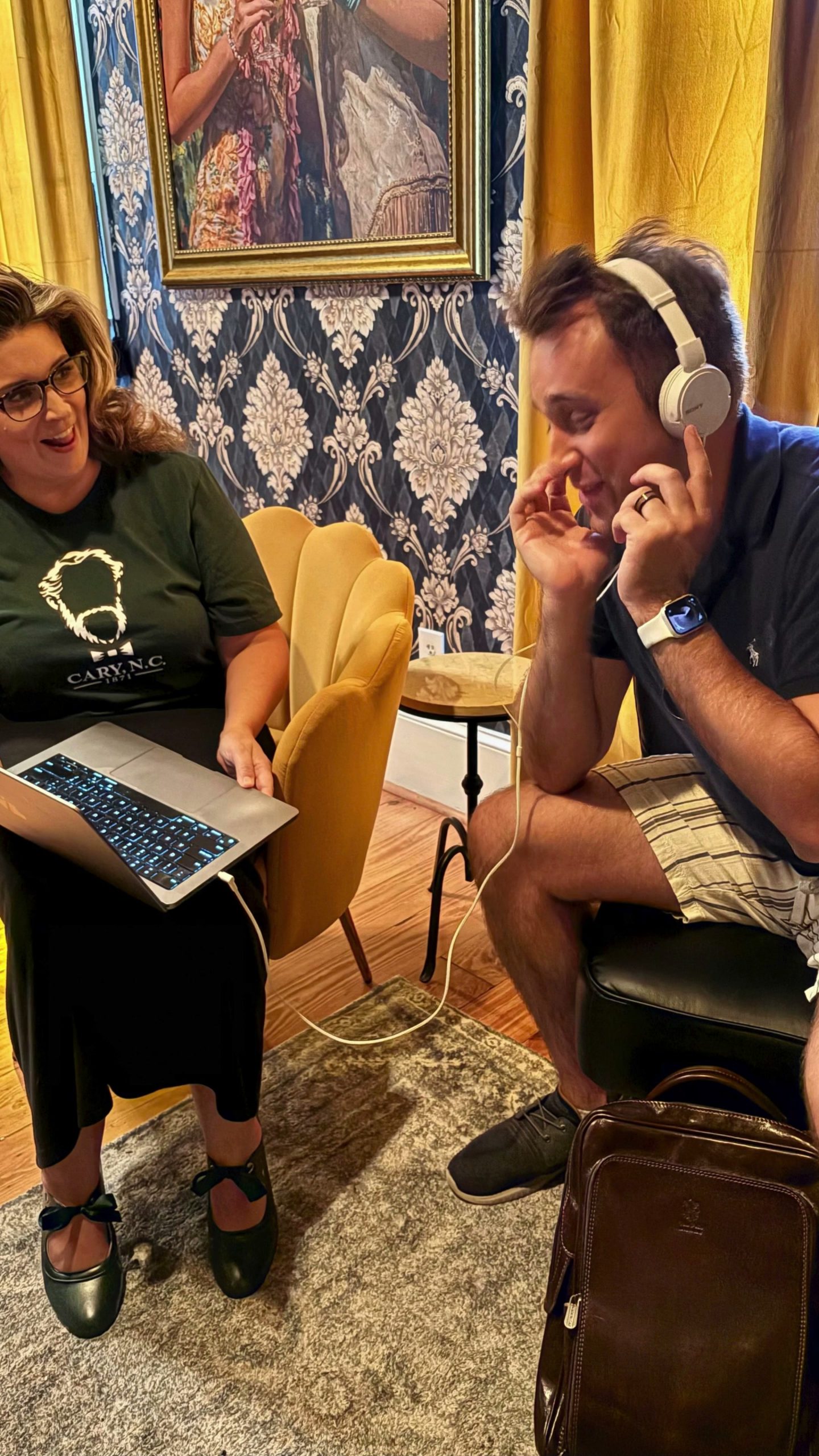
That record she made herself, with her partner, J Allen Crumpler, over a series of sessions at the house.
The equipment is unremarkable: an iPhone, several Zoom digital recorders placed in different rooms, and no video cameras, on the reasoning that every hour recorded is an hour that must be reviewed and that audio has always been where her results are. They carry an EMF detector, though they are quick to say it serves mostly to disqualify evidence. Old wiring throws off readings and can make occupants feel watched, so the wiring is checked first and a share of what might have been findings is discarded.
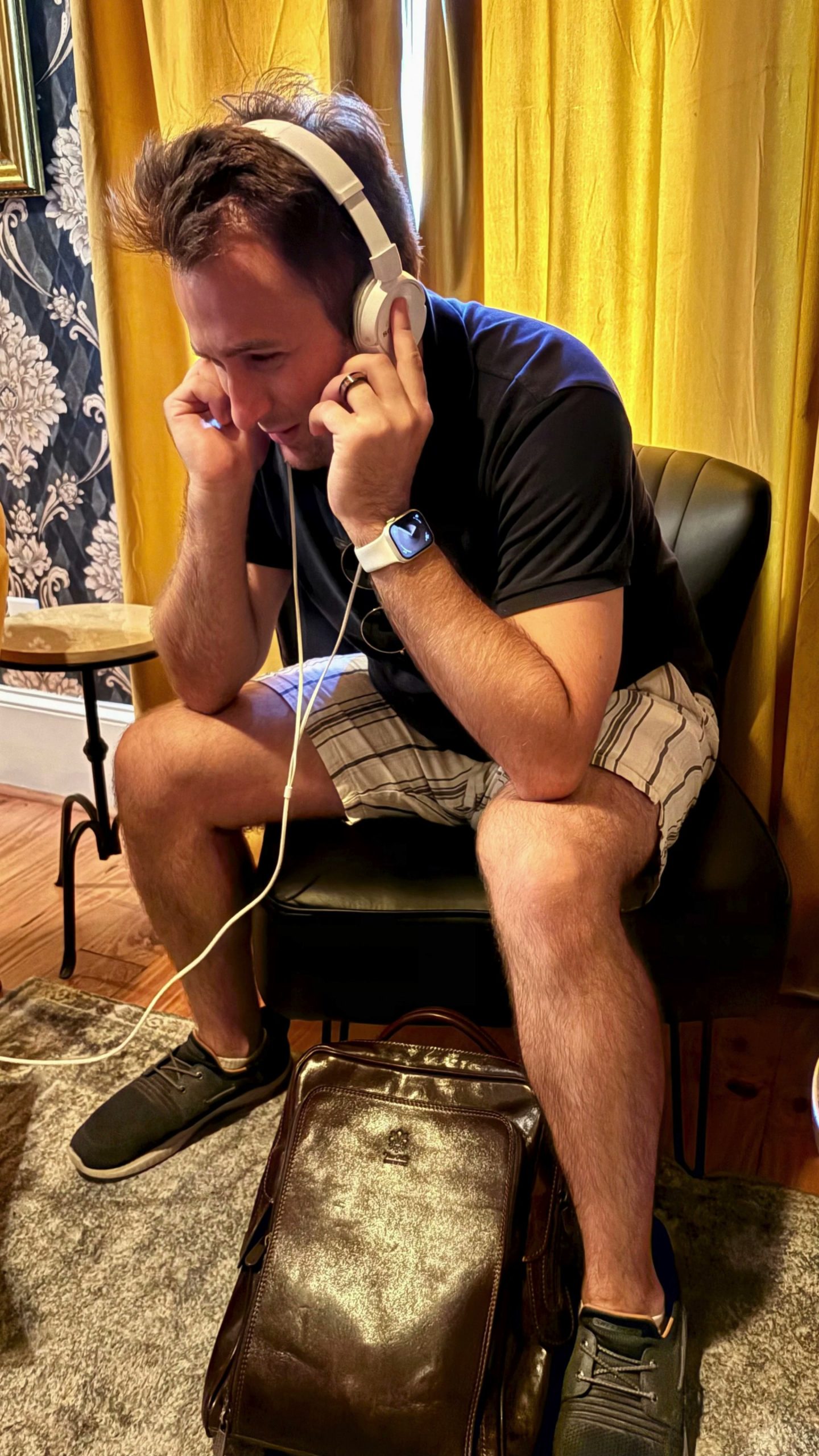
During sessions the two of them narrate their own noises aloud, a burp, a shoe squeak, a passing train, bar staff downstairs, so that on playback nothing ordinary can be misread as anything else. It is, in form, the same discipline as a footnoted report. Sources are identified as they are created.
Against that discipline, the recordings present a short list of items that have not yielded to it.
In one, two voices carry on a conversation. Neither belongs to anyone present. The exchange runs the way conversation in an adjoining room runs, until a third voice, a man’s, low and distinct, interrupts with two words: “Go home.”
In another, there is a sound rather than a voice: loud banging, and chains, sustained enough on playback to suggest real commotion in the stairwell. At the time of the recording, Loflin and Crumpler were standing at the bottom of the stairs, talking. They heard nothing. The significance, if the word applies, is procedural. Their method depends on marking every sound as it occurs. This one was not marked, because it was not heard, and it is present on the recording anyway.
Loflin does not offer an interpretation, and she is precise about the limits of what she has. The history is the history; she can cite it. The recordings are anomalies she and J collected under controlled habits, reviewed, and could not assign to a source. What they are recordings of, she does not claim to know. The restraint will be familiar to anyone who has sat through a preservation commission meeting she runs. The commission does not vote on what it cannot document. She does not either.
The full set of recordings is reserved for their live events. On Wednesday, October 28, one of four October nights in the series, Loflin and Crumpler bring a max of 20 guests into the house after dark for the Pasmore Files, from 7 to 9 p.m. The evening runs in two parts: a review of the recordings and evidence collected there, then an active investigation in the house, with the guests taking part. Tickets are $99 and include a cocktail.
They are also doing a one night only event on October 29 called the Haunted Cary Express, which offers a limo bus tour of historic Cary locations. Their book, “Haunted Cary,” is due out in 2027.
A town like Cary, which has replaced so much of its early self, tends to treat its surviving old houses as documents. The Pasmore House is one, and Loflin has read it as carefully as it can be read on paper: built 1900, a death in the family within the year, another the following generation, schoolchildren at the fireplace after that, then a private home, then eventually zoned for business. The paper record ends, as paper records do, in dates and names. The tape record is thinner and stranger, a few minutes of voices with no one attached to them. She keeps both files. She is careful, in each, to say only what the evidence in front of her supports, and to leave the rest, plainly, open.